
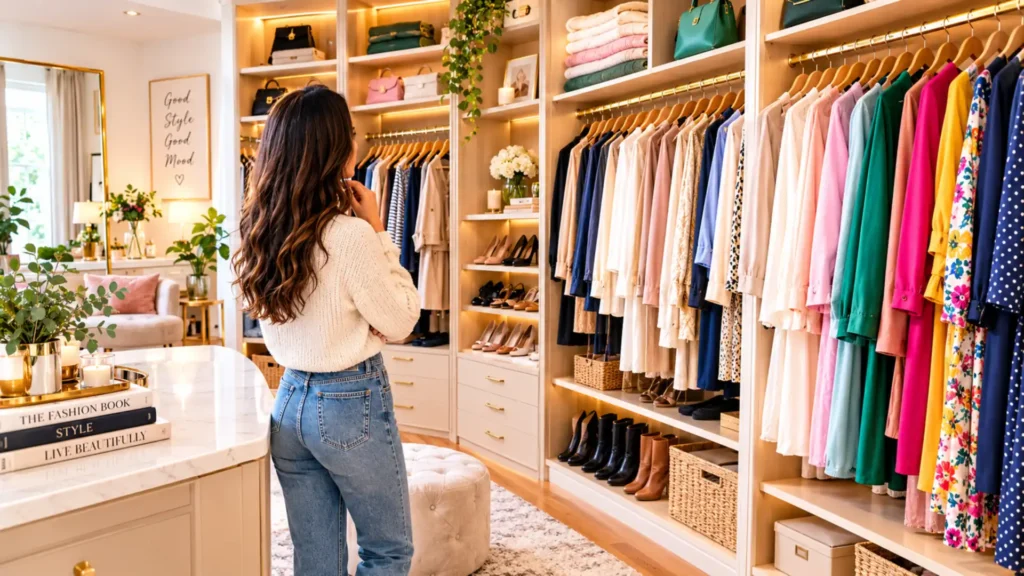
Do you stand in front of a full closet and still feel like you have nothing to wear? You are not alone. Most people do not lack clothes. They lack direction. Once you know how to define your personal style, getting dressed gets faster, shopping gets cheaper, and your outfits finally start to feel like you.
This guide gives you a simple, step-by-step way to find your style, even if you have never thought about fashion before. No expensive pieces and no strict rules, just clear steps you can start today.
Quick answer: To define your personal style, sort your current wardrobe, collect inspiration, match your look to your daily life, choose a small color palette, add a few statement pieces, and keep testing what feels good.
Key Takeaways
- Your favorite clothes already show your style, so start there.
- A mood board of 30 to 50 images reveals clear patterns.
- Your style should fit your real daily life, not an imaginary one.
- A palette of a few neutrals and two or three accent colors makes outfits easy.
- A few statement pieces matter more than a whole new wardrobe.
- Your style can change over time, and that is completely normal.
What Does It Mean to Define Your Personal Style?
Your personal style is the way you use clothes, colors, shapes and accessories to show who you are. To define it means to find the few looks you love and can repeat with confidence. It is different from following trends, because trends change every season while your style stays with you.
When you know your style, you get three clear benefits:
- Smarter shopping: You buy fewer impulse items because you know what fits your look.
- Faster mornings: Most of your clothes work together, so getting dressed takes minutes.
- More confidence: Clothes that feel like you make you comfortable in your own skin.
How to Define Your Personal Style in 6 Steps
Follow these six steps in order. Each one builds on the last, and you can finish the first round in a weekend.
Step 1: Audit Your Closet to Define Your Personal Style
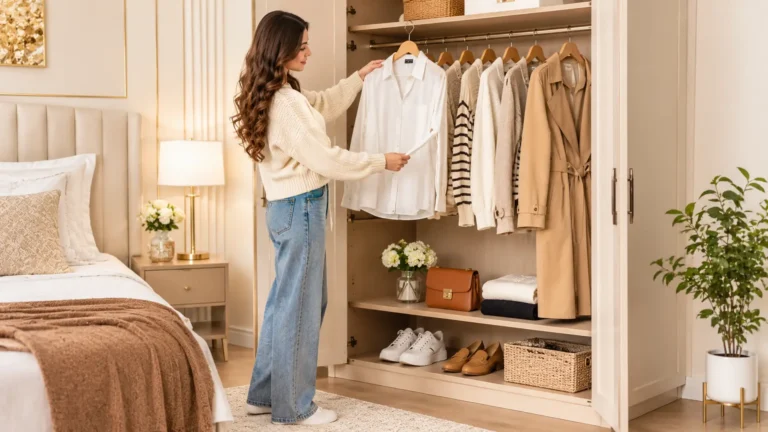
Pull everything out of your closet and make three piles: love, maybe and never. Be honest and quick. If you feel nothing when you hold a piece, it goes in “never.”
Now look at the “love” pile. What do these pieces have in common? Maybe they are all soft neutrals, fitted shapes or bold prints. Your favorites are the best clues to your natural taste, so write down the colors, fabrics and cuts that repeat.

Step 2: Collect Inspiration and Build a Mood Board
Inspiration helps you see patterns you may not notice on your own. Open Pinterest or grab a few magazines and save 30 to 50 images that catch your eye. Include outfits, colors, textures, and even rooms or buildings you like.
Then look for repeats. Do you keep choosing clean minimalist looks, relaxed bohemian layers or sharp streetwear? Those repeats show your style direction, and your mood board becomes your blueprint.

Step 3: Match Your Style to Your Real Life
A beautiful wardrobe is useless if it does not fit your week. If you work in an office, a closet full of evening gowns will not help. If you are on your feet all day, comfort has to come first.
List your three most common activities, such as work, classes, errands or weekend outings. Then make sure your style works for each one. The goal is a look you love that is also easy to wear every day.
Step 4: Choose a Color Palette and Fabrics You Love
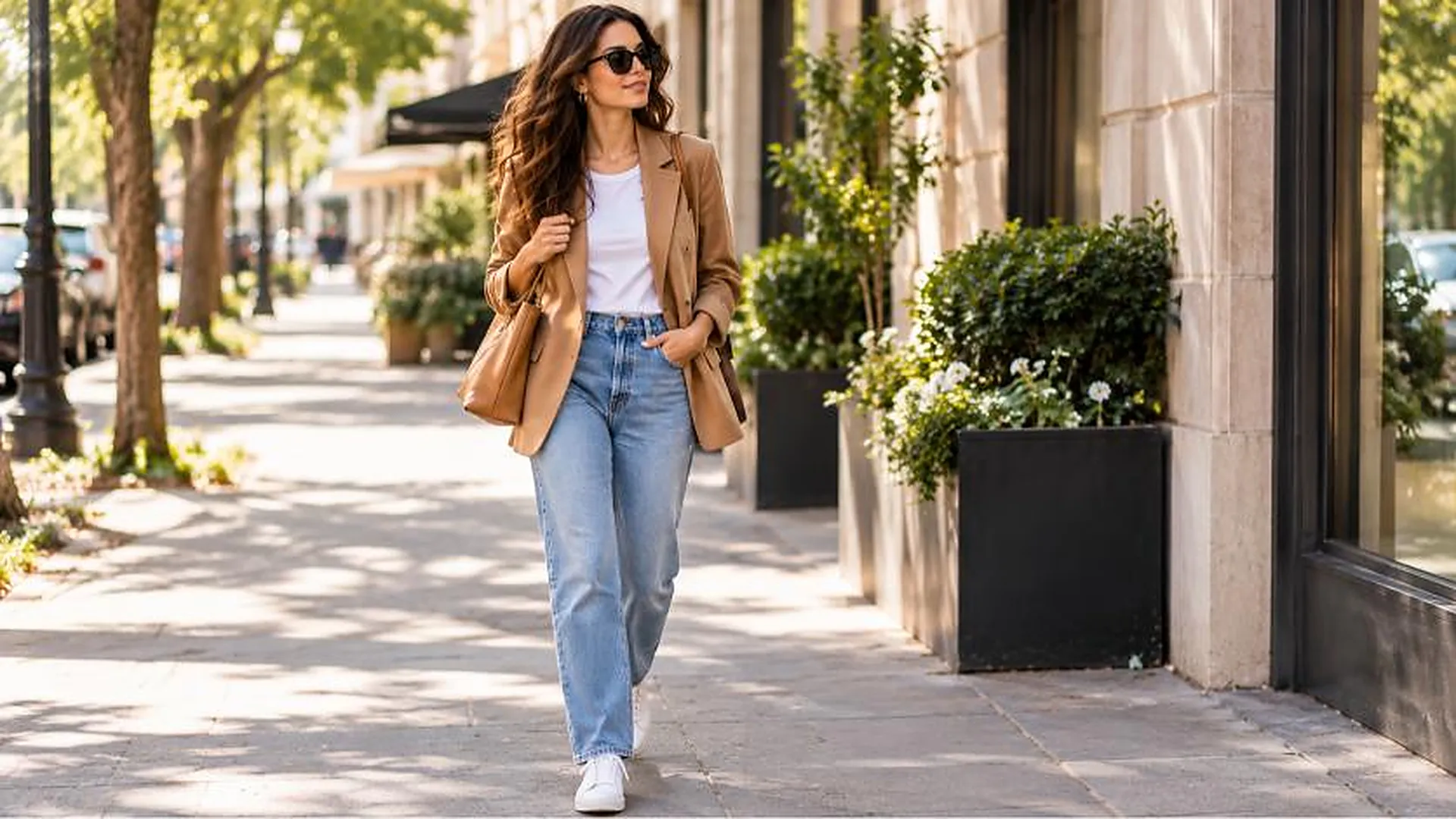
A small palette makes mixing and matching almost effortless. Use this simple structure:
- Neutrals (3 to 4 colors): Black, white, beige, grey or navy for your base.
- Accent colors (2 to 3 colors): Shades like emerald green, mustard yellow or dusty rose that suit your skin tone and make you happy.
- Signature fabrics: The textures you reach for most, such as cotton, linen, silk, knit or denim.
If you want to understand why some colors work well together, this overview of color theory is a good place to start.
Step 5: Add a Few Statement Pieces
Basics keep your wardrobe practical, and statement pieces give it personality. A statement piece is any item people remember, like a bold blazer, a leather jacket, unique jewelry or great shoes.
You do not need many. Two or three pieces that match your palette can turn a simple outfit into a signature look. Choose pieces that work with at least three outfits you already own.
Step 6: Test, Refine and Let Your Style Evolve
Your style is not fixed. It changes as your life, work and taste change. Give yourself permission to try new shapes, mix thrifted finds with new pieces, and wear an outfit for a week to see how it feels.
Keep one simple rule: if a piece makes you feel confident, keep it. If you keep avoiding it, let it go. Over time, your closet gets smaller and your style gets clearer.
Common Personal Style Types
Most people mix two or three of these. Use them as starting points, not strict labels.
| Style | Look and feel | Typical pieces |
|---|---|---|
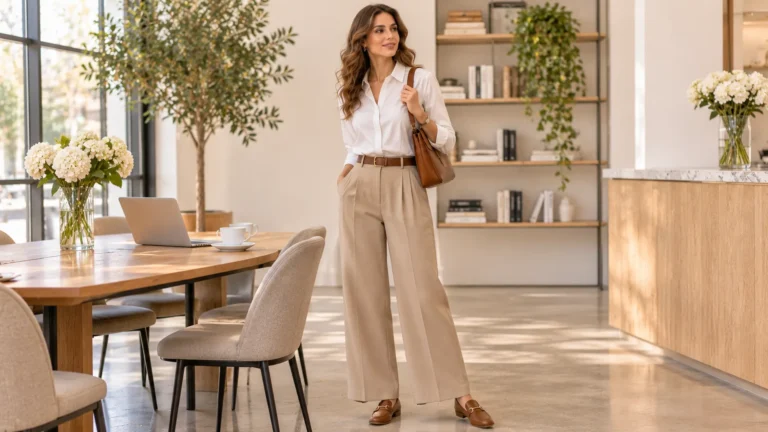
| Classic | Polished and timeless | Blazers, white shirts, tailored trousers |
| Minimalist | Clean and simple | Neutral basics, straight cuts, few accessories |
| Bohemian | Relaxed and artistic | Flowy dresses, prints, layered jewelry |
| Streetwear | Casual and bold | Sneakers, hoodies, cargo pants, bomber jackets |
| Vintage | Retro and unique | High-waisted denim, thrifted finds, classic watches |
| Romantic | Soft and feminine | Floral prints, ruffles, pastel colors |
| Edgy | Strong and confident | Leather jackets, black outfits, boots |
5 Mistakes to Avoid When You Define Your Personal Style
- Copying trends without thinking: If a trend does not match your palette or lifestyle, skip it.
- Dressing for an imaginary life: Buy for the life you actually live.
- Keeping clothes that do not fit: Fit matters more than price or brand.
- Buying too much too fast: Add a few pieces at a time and test them.
- Comparing yourself to others: Your style should feel right to you, not to anyone else.
FAQs: How to Define Your Personal Style
How long does it take to define your personal style?
Most people feel clear about their style after two to four weeks of sorting their wardrobe, collecting inspiration and testing outfits. It never fully ends, because your taste keeps growing with you.
Can I have more than one personal style?
Yes. Many people mix styles, such as classic at work and bohemian on weekends. The key is a shared thread, like the same color palette or similar fabrics, so everything still looks like you.
Do I need to buy a new wardrobe to find my style?
No. Start by editing and restyling what you already own. Add new pieces slowly, only when they match your palette and fill a real gap. A capsule wardrobe is a simple way to begin.
What if I do not know what I like?
Start with your “love” pile and a mood board. If you still feel unsure, take photos of three outfits you felt great in and note what they share, such as color, shape or fabric.
How do I find my personal style on a small budget?
Use what you already own, shop secondhand, and buy only pieces that match your palette. Thrift stores and clothing swaps are good places to test new looks without spending much.
Final Thoughts: Define Your Personal Style With Confidence
Learning how to define your personal style is not about perfect taste or big spending. It is about noticing what you already love, building a clear palette, and choosing pieces that fit your real life. Start with one step today: empty your closet and make the three piles. The rest gets easier from there.
Want more ideas? Explore our fashion tips and style guides, or browse the latest articles on the blog.
Comments