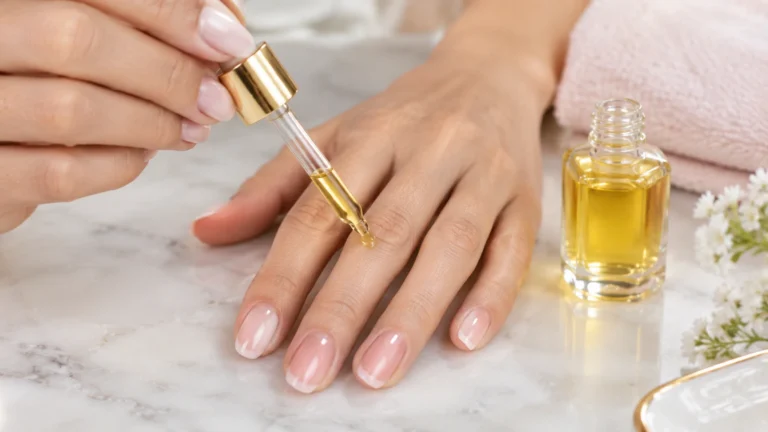

Beautiful nails start with good nail care. These nail care tips cover the daily habits that keep healthy nails, how to moisturize nails and strengthen weak ones, which nail care products are worth having, how to choose from the different nail shapes, and a simple way to apply nail lacquer at home so your manicure looks smooth and lasts for days.
Quick answer: For healthy nails, moisturize them with cuticle oil and hand cream, protect them from water and harsh chemicals, file them in one direction and use a base coat under your nail lacquer. Fingernails grow only about 3 millimeters a month, so most people see stronger nails after a few weeks of steady nail care.
Daily Nail Care Habits for Healthy Nails
Healthy nails are the base of every good manicure. Nails are made of a tough protein called keratin, and a few small habits protect it:
- Moisturize: Rub hand cream and cuticle oil into your nails each night.
- Wear gloves: Protect your hands when washing dishes or cleaning.
- Do not use nails as tools: Opening cans or scratching labels causes breaks.
- Trim regularly: Keep nails at a comfortable length and file in one direction.
- Eat well: Protein, fruits, vegetables and enough water support strong nails.
- Give nails a break: Rest your nails for a few days between manicures.
How to Moisturize Nails
Nails and the skin around them dry out just like your hands. When you moisturize nails every day, they stay flexible and bend instead of snapping.
- Put a drop of cuticle oil on each nail and massage it in for 10 to 15 seconds.
- Rub hand cream over your hands, fingers and nails.
- Repeat at night and after you wash your hands.
- For extra softness, apply a little petroleum jelly to your nails and cuticles before bed.
Look for products with jojoba oil, shea butter, glycerin or vitamin E. If your skin is sensitive, test a new product on one finger first.
How to Strengthen Nails
There is no instant fix, because nails grow slowly. But these habits help weak nails get stronger over time:
- Limit water: Long soaking softens nails. Wear gloves for chores.
- Choose gentle removers: Use an acetone-free remover and use it less often.
- Keep nails short while they recover: Short, rounded nails are less likely to snag and tear.
- Add a protective layer: A nail strengthener or a good base coat shields the nail.
- Eat a balanced diet: Enough protein, iron and zinc support nail growth.
- Be careful with supplements: Some people take biotin for nails, but the evidence is mixed, so ask a doctor first.
- Stop biting and peeling: Do not bite nails or peel off polish.
Nail Care Products You Need
You do not need a big kit. These nail care products cover most routines:
- Fine nail file: A glass or fine-grit file is gentle on nails.
- Nail clippers: For a clean, even cut.
- Soft cuticle pusher: To push cuticles back without cutting them.
- Cuticle oil and hand cream: To keep nails and skin soft.
- Acetone-free polish remover: Gentler on dry nails.
- Base coat and top coat: A base coat protects, and a top coat adds shine.
- Nail strengthener: Optional, for weak or peeling nails.
How to choose nail care products: Pick simple formulas with few harsh chemicals, check the label for ingredients that irritate your skin, and replace files and buffers when they wear out. Clean your tools after each use to keep your nails and skin safe.
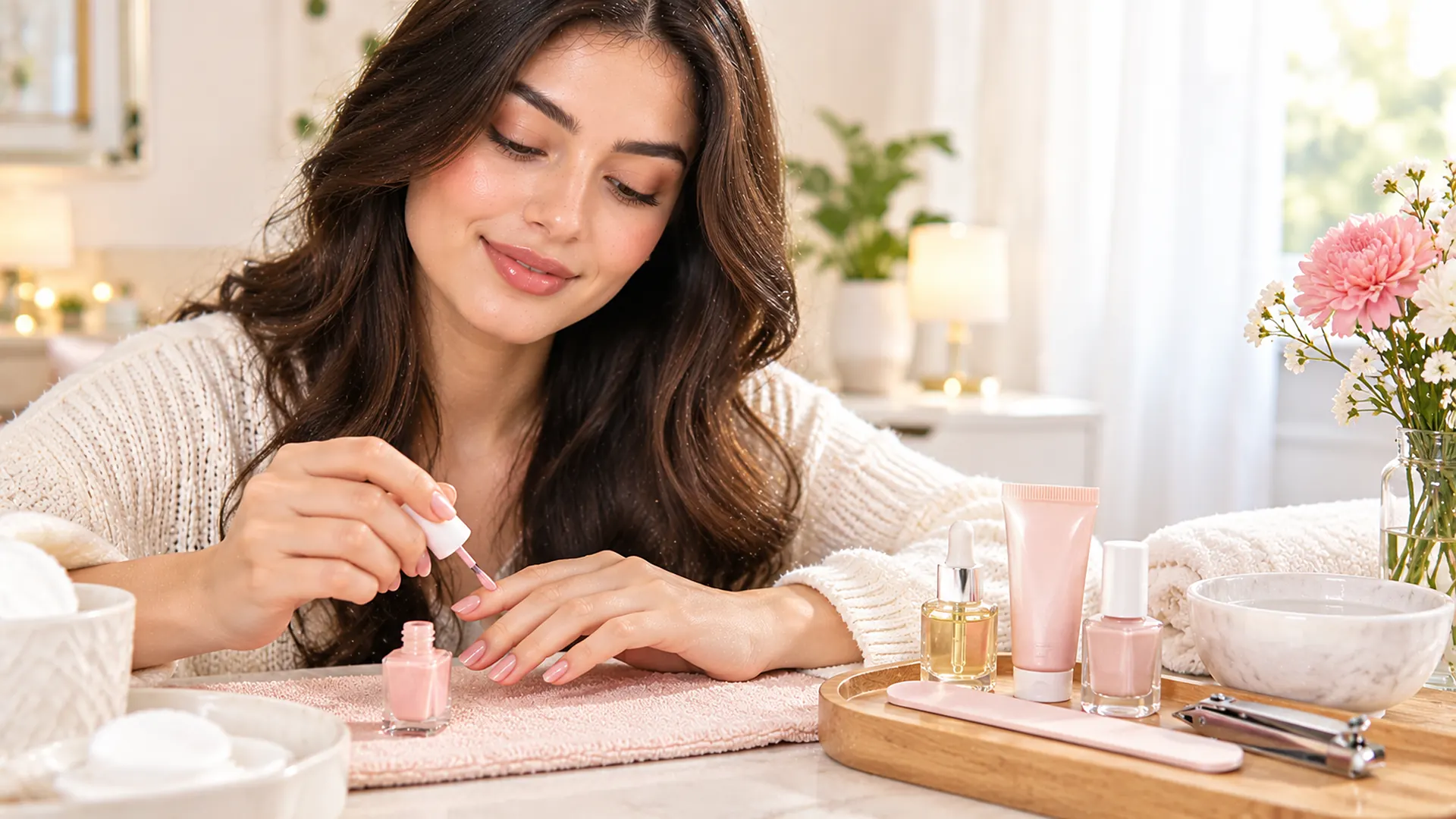
Different Nail Shapes and How to Choose One
The right shape depends on your nail length, finger shape and daily life. Here are the most popular nail shapes:
| Shape | Look | Best for | Care note |
|---|---|---|---|
| Round | Soft curve at the tip | Short and weak nails | Very sturdy, rarely snags |
| Oval | Rounded, slightly longer | Long, slim fingers | Keep the sides straight to avoid weak corners |
| Square | Straight edge, sharp corners | Strong nails, classic look | Soften the corners so they do not catch |
| Squoval | Square with softened corners | Everyday wear | A good balance of strength and style |
| Almond | Tapered sides, rounded tip | Longer nails, elegant look | Needs length and careful filing |
| Coffin (ballerina) | Tapered with a flat tip | Long nails, bold look | Less sturdy, best for strong nails |
| Stiletto | Long and pointed | Fashion and special looks | Fragile, not ideal for daily use |
Tip: If your nails are weak, choose round or squoval. File dry nails in one direction, because wet nails are softer and tear more easily.
Types of Nails: Natural, Gel, Acrylic and Press-On
When people talk about types of nails, they usually mean the type of manicure they wear. Each one needs slightly different nail care:
| Type of nails | What it is | Things to know |
|---|---|---|
| Natural nails | Your own nails, with or without polish | Gentlest option and easiest to keep healthy |
| Gel manicure | Gel polish cured under a UV or LED lamp | Lasts two to three weeks, but wrong removal can damage nails |
| Acrylic nails | Sculpted extensions made with liquid and powder | Needs regular fill-ins by a professional |
| Dip powder | Colored powder layered over the nail | Long lasting, removal needs soaking |
| Press-on nails | Ready-made nails stuck on with glue or tabs | Easy and removable, but do not pull them off |
Whichever you choose, give your natural nails regular breaks, never peel off gel or acrylic, and moisturize often. Gel lamps use UV light, so many dermatologists suggest applying sunscreen to your hands first.
Nail Care Before Polish: How to Prep Your Nails
- Remove old polish with a gentle, acetone-free remover.
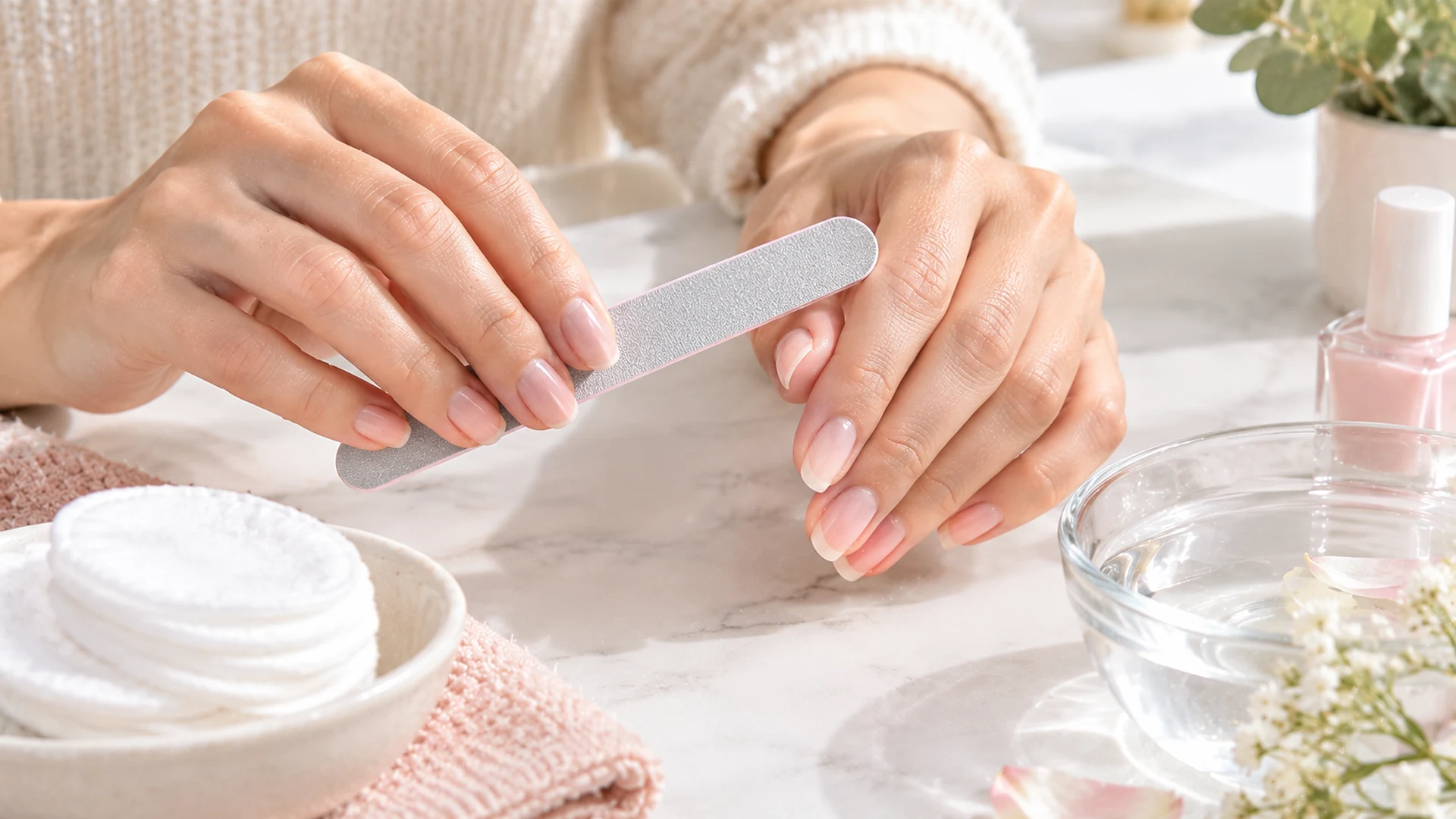
- Trim and file nails into your chosen shape while they are dry, in one direction.
- Soak fingertips in warm water for a few minutes to soften the cuticles.
- Push back cuticles softly and avoid cutting them.
- Wash and dry your hands, then wipe each nail with a cotton pad to remove oil and dust.
How to Apply Nail Lacquer
- Base coat: Apply one thin layer. It protects the nail from staining and helps color stick.
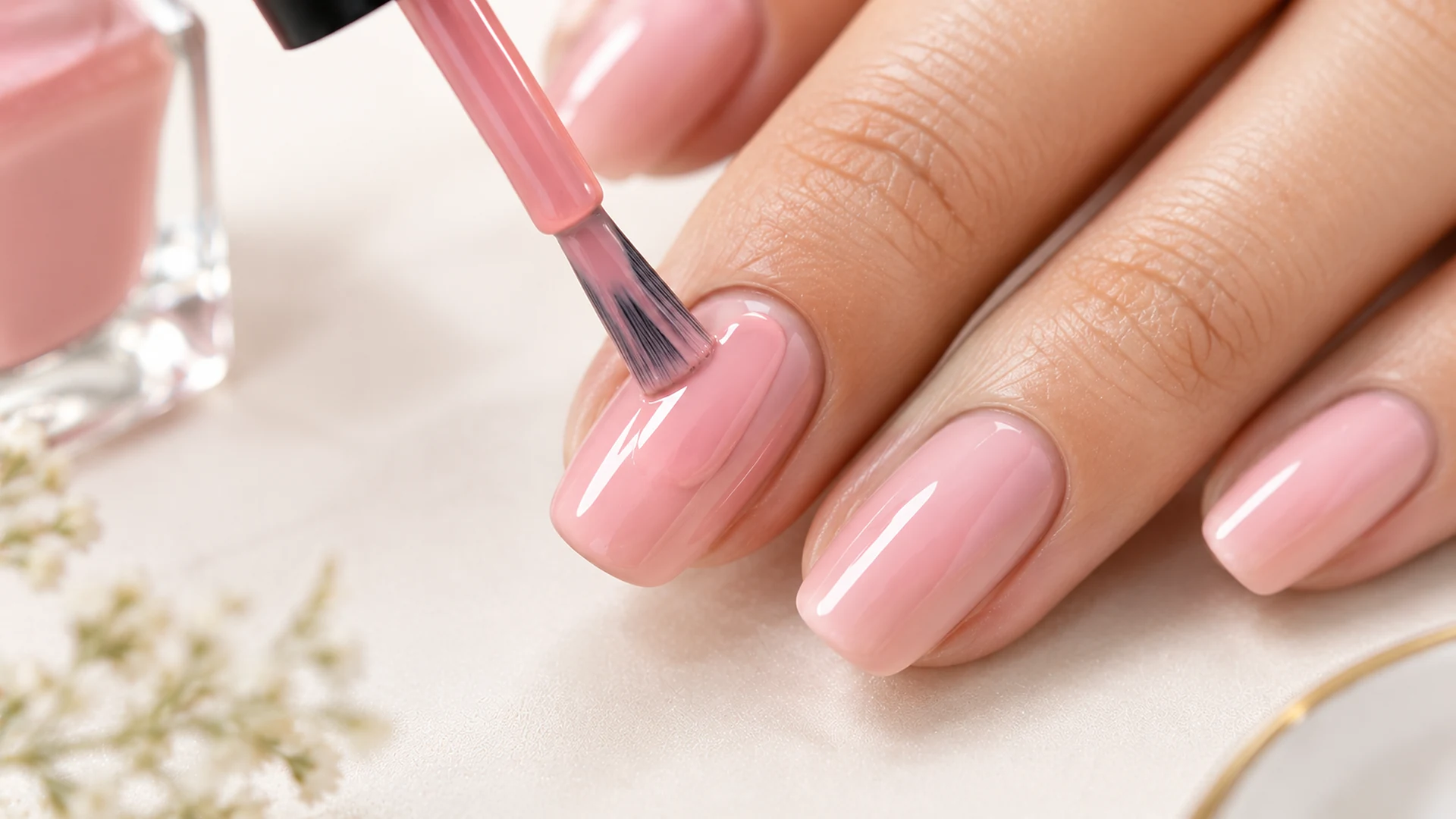
- First color coat: Dip the brush, wipe one side on the bottle neck and paint three strokes: center, left, right. Keep the layer thin.
- Second color coat: Wait about two minutes, then add a second thin layer for even color.
- Cap the free edge: Run the brush along the tip of the nail. This small step reduces chipping.
- Top coat: Finish with a glossy top coat to seal the color and add shine.
- Clean up: Dip a small brush in remover and clean the skin around the nail.
Nail Care After Polish: Make Your Manicure Last Longer
- Use thin coats. Thick coats stay soft and smudge.
- Reapply top coat every two to three days.
- Keep nails out of hot water for the first hour.
- Apply cuticle oil once the nail lacquer is fully dry.
- Store polish bottles upright, in a cool, dark place.
Common Nail Care Problems and Quick Fixes
- Peeling nails: Often caused by dryness or harsh removers. Moisturize and take polish breaks.
- Brittle nails: Limit water exposure and use a nail strengthener.
- Yellow stains: Always use a base coat under dark colors.
- Ridges: Gentle buffing can help, but do not over-buff.
- Hangnails: Do not pull them. Trim them cleanly and moisturize.
If nails change color, thicken, lift from the nail bed or become painful, see a doctor or a dermatologist.
FAQs About Nail Care
What is the best nail care routine?
A simple routine is enough. Moisturize your nails with cuticle oil and hand cream every night, wear gloves for cleaning, file in one direction, use a base coat under polish and give your nails a break between manicures.
How can I strengthen my nails fast?
There is no overnight fix, because fingernails grow only about 3 millimeters a month. Moisturize daily, avoid harsh removers and long soaking, keep nails short while they recover and use a base coat. Most people see a difference in a few weeks.
How often should I moisturize nails?
Once or twice a day is ideal, especially after washing your hands and before bed. Use cuticle oil on the nails and hand cream on the rest of your hands.
What are the different nail shapes?
The most common nail shapes are round, oval, square, squoval, almond, coffin and stiletto. Round and squoval are the sturdiest, while coffin and stiletto need more care.
Which nail shape is best for weak nails?
Short round or squoval nails are usually the strongest, because they have fewer sharp corners that catch and break.
What are the main types of nails?
The main types of manicures are natural nails, gel nails, acrylic nails, dip powder nails and press-on nails. Natural nails are the gentlest on your nail plate.
How do I make nail lacquer last longer?
Prep your nails, apply a base coat, use thin coats of color, cap the free edge and finish with a top coat. Reapply the top coat every two to three days.
How long should nail lacquer dry?
Allow two minutes between coats and at least 20 to 30 minutes before doing tasks. Full hardness takes a few hours.
How often should I give my nails a break from polish?
A few days of rest between manicures, with some cuticle oil, helps keep nails comfortable and less dry.
Why do my nails keep peeling or breaking?
Common reasons are dryness, harsh removers, using nails as tools and frequent water exposure. If peeling is severe or nails change color, check with a doctor.
Final Thoughts on Nail Care
Strong, healthy nails come from simple nail care: moisturize nails every day, protect them, pick a shape that suits your life and apply nail lacquer in thin layers. Follow these nail care tips and your hands will look polished all week. For more ideas, browse all of our Nail Care Tips.