

What is the best moisturizer for dry skin in winter? The best choice is a fragrance-free cream or ointment that combines a humectant (such as hyaluronic acid or glycerin), an emollient (such as shea butter) and an occlusive (such as petrolatum or dimethicone). Ceramides are a useful bonus. Apply it while your skin is still damp after washing.
Winter air is cold and dry, and indoor heating makes it worse, from Vancouver to Helsinki. If your skin feels tight, rough or flaky by midday, your moisturizer (or moisturiser, as UK readers write it) may not be doing enough. Choosing well is less about hype and more about reading the ingredient list. This guide pairs well with our winter skincare routine for dry skin.
Key takeaways
- Look for all three: humectant, emollient and occlusive.
- Cream or ointment beats lotion for dry skin.
- Choose “fragrance-free,” not “unscented,” and patch test new products.
- Price does not decide quality. The ingredient list does.

How Do You Read a Moisturizer Label?

The front of the jar sells a feeling. The back tells you what is inside. The ingredient list is printed from the largest amount to the smallest.
First, look for a mix of moisture helpers. Second, check for common irritants such as fragrance, alcohol and essential oils. Third, look for the words “fragrance-free” rather than “unscented,” because the American Academy of Dermatology (AAD) notes that unscented products can still contain masking chemicals that irritate dry skin.
Do not trust a label just because it says “natural.” Dermatologists point out that natural ingredients can still trigger allergies, so “natural” does not mean gentle.
What Are Humectants, Emollients and Occlusives?
Most good moisturizers use three types of ingredients. Each has a different job, so the best formulas combine them.
Humectants: the water magnets
Humectants attract water into the top layer of skin. Common examples are hyaluronic acid, glycerin, urea and sorbitol. They feel light and fresh, which is why a hyaluronic acid moisturizer is so popular. On their own, however, they can wash off easily, so look for them in a formula that also has the next two types.
Emollients: the smoothers
Emollients fill the tiny gaps that dryness creates, so skin feels softer and smoother. Shea butter is a familiar example. Many emollients also add a slight protective film.
Occlusives: the sealers
Occlusives sit on the surface and help skin hold on to the moisture it already has. Petrolatum (petroleum jelly), dimethicone and lanolin are common examples. They feel thicker, but they are the reason a rich cream lasts through a cold, windy day.
Ceramides: the barrier builders
Ceramides are waxy lipids your skin naturally contains. Moisturizers with ceramides help skin hold on to moisture, and dermatologists often recommend them for dry skin. Cleveland Clinic lists ceramide 1 (EOS), ceramide 3 (NP) and ceramide 6-II (AP) as names to look for on a label.
How Do the Ingredient Types Compare?
| Type | What it does | Label examples | Feels like |
|---|---|---|---|
| Humectant | Draws water into the skin’s top layer | Hyaluronic acid, glycerin, urea, sorbitol | Light, fresh, quick to absorb |
| Emollient | Softens and smooths rough, dry skin | Shea butter and similar plant butters | Soft, cushiony |
| Occlusive | Seals in moisture to slow loss | Petrolatum, dimethicone, lanolin | Rich, protective, sometimes greasy |
| Ceramides | Help skin hold on to moisture | Ceramide 1 (EOS), ceramide 3 (NP), ceramide 6-II (AP) | Usually invisible in the texture |
Is Cream, Lotion or Ointment Best for Dry Skin?
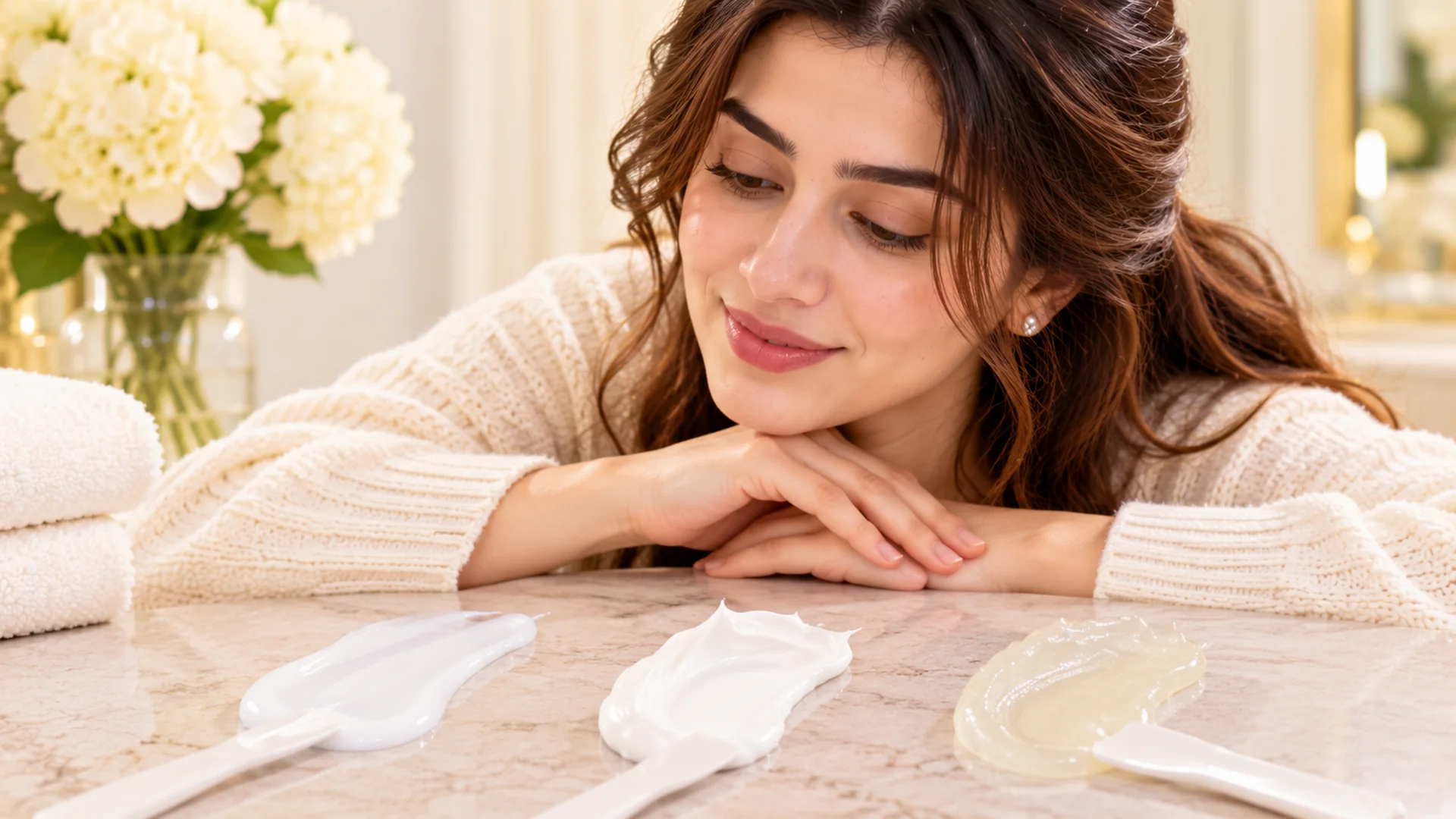
Texture matters as much as ingredients. In general, the thicker the product, the more oil it contains and the more moisture it holds in.
- Lotions are the lightest. They contain more water, so they feel pleasant but can be too weak for truly dry skin.
- Creams are thicker and balance water and oil. They are a solid daily choice for most dry skin.
- Ointments are the thickest and greasiest. The National Eczema Association says they seal in moisture best and rarely sting.
AAD dermatologists suggest that people with dry skin start with a cream or ointment instead of a lotion. If an ointment feels too heavy, a cream is the next best step. A simple trick: use an ointment on very rough spots like heels, elbows and hands, and a cream everywhere else. You can also save ointments for bedtime if you dislike the greasy feel during the day.
Why Should You Patch Test and Avoid Fragrance?

Fragrance is one of the most common reasons a moisturizer stings or itches. Alcohol, dyes and essential oils can also bother dry skin. Choose fragrance-free formulas, especially if your skin is already irritated or sensitive.
Before you commit to a new product, do a quick patch test. The AAD suggests these steps:
- Apply a quarter-sized amount to a small spot, such as your inner elbow or the underside of your arm.
- Choose a spot where the product will not be rubbed or washed off.
- Repeat twice a day for 7 to 10 days.
- Watch for redness, itching or swelling.
If a reaction appears, wash the product off gently and stop using it. Try only one new product at a time so you know which one caused a problem. If the reaction is severe or does not clear up, see a board-certified dermatologist.
Should You Use the Same Moisturizer on Face and Body?

Usually not. Your face and body have different needs, so one product rarely suits both.
For your face
Facial skin is thinner and more sensitive. Cleveland Clinic suggests a lighter gel or lotion for the face, and a heavier cream only if your face is very dry. Look for “non-comedogenic,” which means the product should not clog pores. This matters most if you are also prone to breakouts. Keep using a broad-spectrum sunscreen with SPF 30 or higher every day, even when it is cloudy.
For your body
Your body can handle richer formulas. A thick cream or ointment is ideal, because lotions contain more water and can feel thin on dry arms and legs. For hands, keep a non-greasy hand cream near every sink and reapply after washing.
When should you apply it?
Pat your skin dry after a shower, leaving it slightly damp, and apply moisturizer within about three minutes. Keep showers short and lukewarm. For the full daily steps, see our winter skincare routine, and for the basic order of products read our skin care routine steps guide.
Is an Expensive Moisturizer Worth It?
Not automatically. Cleveland Clinic advises reading the ingredient list instead of relying on cost, since expensive products are not necessarily more effective. Whether you spend a little or a lot, check for the same basics:
- A humectant, an emollient and an occlusive in the same formula.
- Ceramides, if you want extra barrier support.
- No fragrance, and no drying alcohol high on the list.
- A jar or tube size you will actually finish, because dry skin needs generous, daily use.
It is Black Friday week, so a little smart shopping can help. Decide your must-have ingredients first, then compare labels before you look at any discount. A sale is only a good deal if the formula suits your skin. Be careful about stocking up on a brand-new product you have not patch tested. Buying one size first is the safer move.
What Does a Simple Winter Moisturizing Plan Look Like?
Choose one fragrance-free cream for your face and a thicker cream or ointment for your body. Add an ointment for hands, elbows and heels if needed. Apply after washing while skin is damp, and top up whenever it feels tight. If you wear makeup, a well-hydrated base helps it sit more smoothly.
Moisturizer cannot fix everything. Persistent dryness can be linked to conditions such as eczema or psoriasis, so see a dermatologist if your skin stays dry, cracked, painful or itchy despite good care.
FAQs
What is the best moisturizer for very dry skin in winter?
For very dry skin, a fragrance-free ointment or thick cream is usually the strongest choice. Look for a formula that mixes a humectant, an emollient and an occlusive, and consider ceramides too. Apply it right after washing, while skin is still damp, and reapply when it feels tight.
Is a hyaluronic acid moisturizer enough on its own?
Usually not in winter. Hyaluronic acid is a humectant, so it draws water into the skin, but it works best when paired with an emollient or occlusive that seals that moisture in. Choose a cream that contains hyaluronic acid alongside richer ingredients like shea butter or petrolatum.
Do ceramides really help dry skin?
Ceramides are lipids your skin naturally contains, and dermatologists often recommend moisturizers with them. They help skin hold on to moisture. They are not a cure for every skin problem, so keep up gentle cleansing, sunscreen and regular moisturizing as well.
How often should I moisturize in winter?
At least once a day, and more often if your skin is very dry. The AAD suggests applying it after bathing, after washing your hands and whenever skin feels dry. Skin that stays rough, painful or itchy despite regular use is worth showing to a dermatologist.
Final Thoughts
The best moisturizer for dry skin has the right ingredients, a texture you enjoy and no fragrance to irritate. Read the label, patch test and apply it consistently. Want more easy beauty tips? Browse our Skin care Tips or join the newsletter for new guides each week.
For more detail, see the American Academy of Dermatology moisturizer guide and the Cleveland Clinic moisturizer guide.
Medical note: this article is general education, not medical advice. Last reviewed: 11 November 2026.