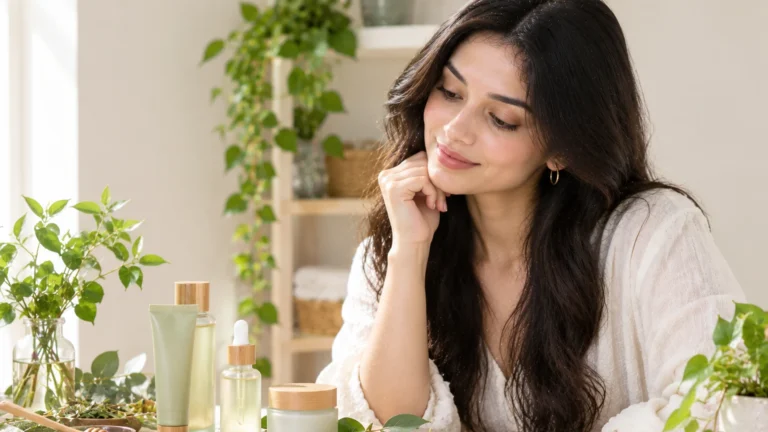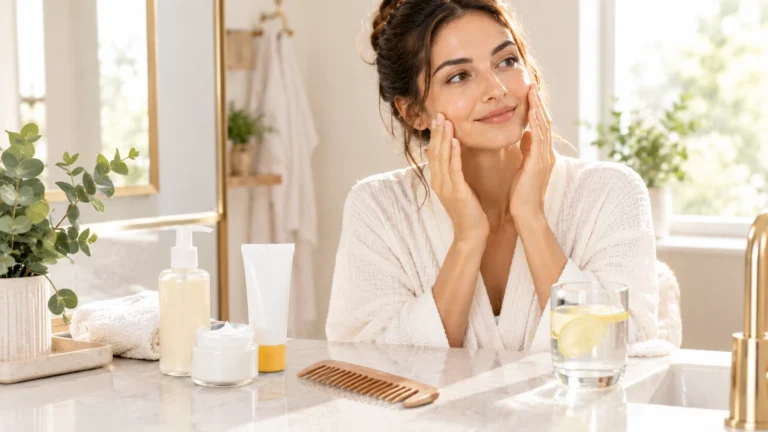
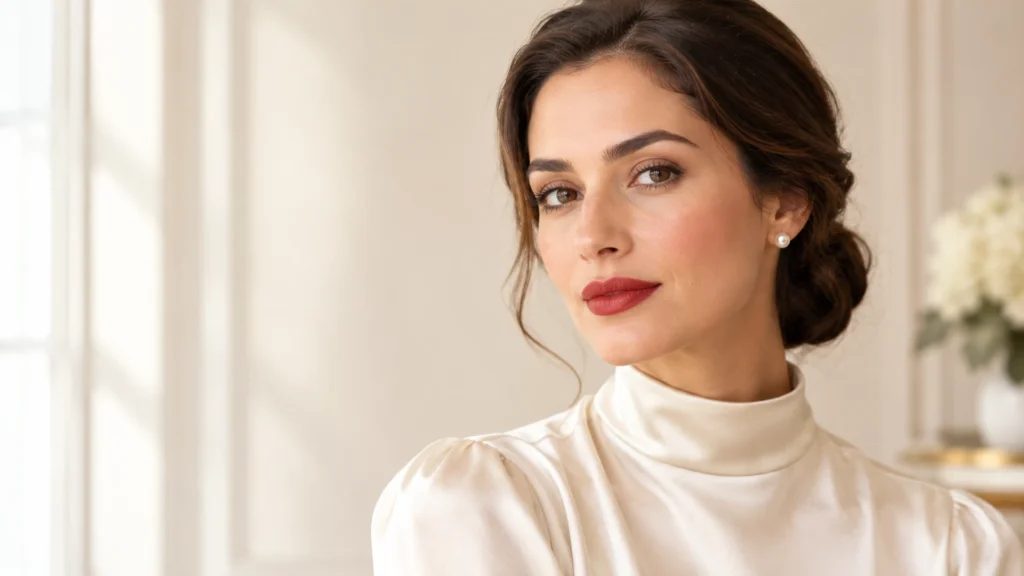
What is classic beauty? In simple words, classic beauty is a timeless kind of beauty built on balance, elegance and polish rather than short-lived trends. It is the look of a crisp white shirt, softly defined brows, healthy skin, neat hair and quiet confidence, a look that was admired 70 years ago and still looks right today.
This guide explains the meaning of classic beauty, where the idea comes from, its main features, and how to get a classic beauty look with makeup, skin care, hair and style, step by step. You will also find famous icons, common myths and a quick FAQ.
Quick answer: Classic beauty is a timeless ideal based on balance, proportion, simplicity and refined grooming. It focuses on healthy skin, neat features and understated elegance instead of trends, and anyone can achieve it, whatever their age, skin tone or face shape.
Key takeaways:
- Classic beauty is about balance, simplicity and polish, not about one fixed face.
- The idea started in ancient Greece and has been updated by every era since.
- A classic makeup look usually has one hero feature, such as a red lip, with soft eyes and defined brows.
- Healthy skin, neat hair and a small wardrobe of well-fitted basics complete the look.
- Classic beauty is a style anyone can build, not a standard anyone has to meet.
What Is Classic Beauty? A Simple Definition
Classic beauty describes a style of beauty that stays attractive across decades. It rests on three ideas: balance (features and proportions that look harmonious together), simplicity (clean, uncluttered styling) and polish (well-kept skin, hair and clothes). The word “classic” simply means something people keep admiring, no matter what is trending.
It is just as important to say what classic beauty is not. It is not one fixed face, skin tone or age. It is not about being flawless or following a strict rulebook. Beauty is personal and differs across cultures, so the most helpful way to see classic beauty today is as a style of elegance that anyone can build, not a standard anyone must meet.
| Part of the look | Classic beauty style |
|---|---|
| Core idea | Balance, simplicity and polish |
| Skin | Healthy, even and luminous |
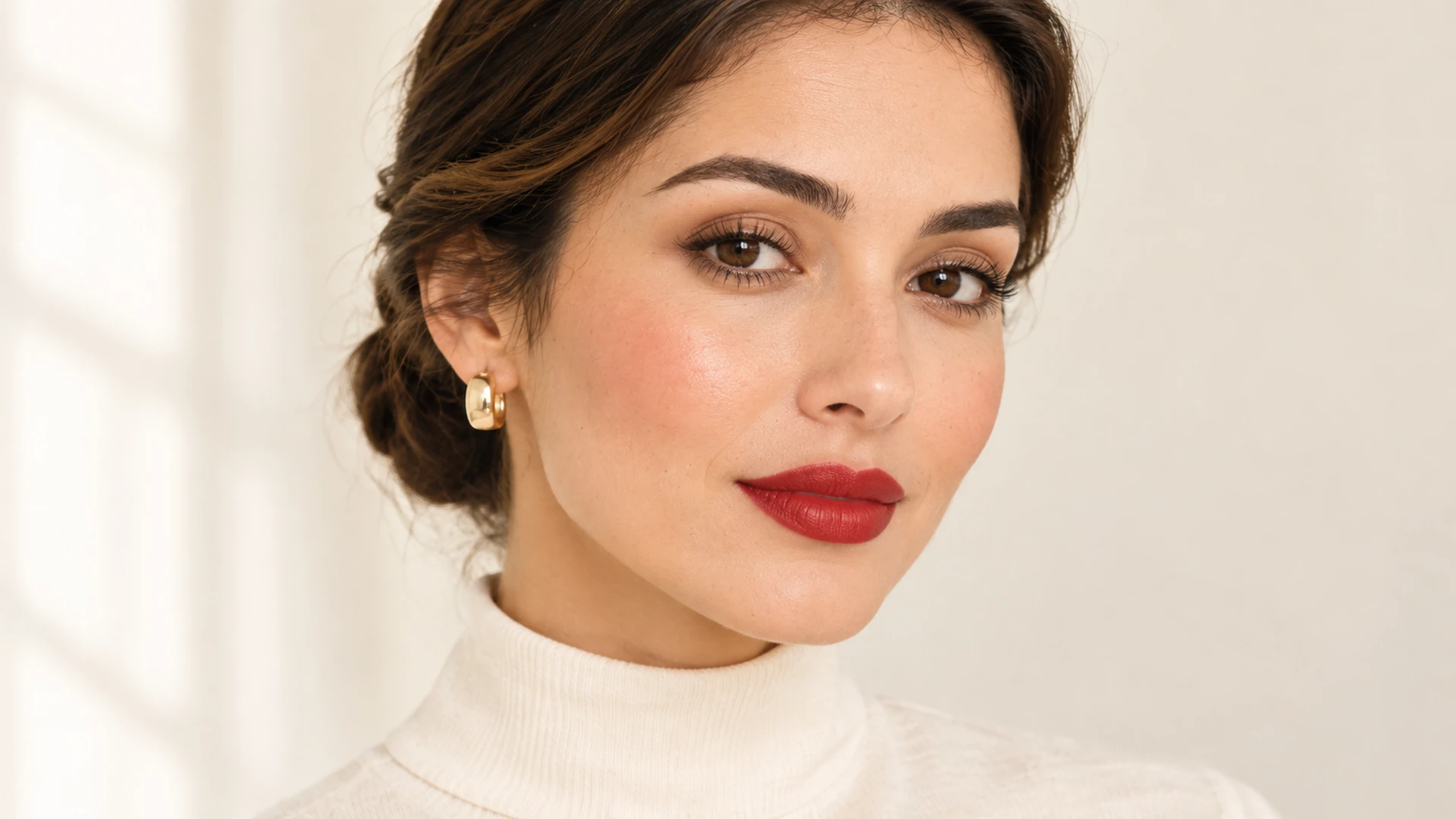
| Makeup | Soft and defined: neat brows, neutral eyes, a red or rose lip |
| Hair | Neat and styled: soft waves, a chignon or a sleek bob |
| Clothes | Well-fitted basics in neutral colors |
| Attitude | Calm, poised and confident |
Where the Idea Comes From: A Short History
The idea of “classic” beauty goes back to ancient Greece and Rome. Artists and thinkers of that time saw beauty as balance, harmony and proportion, and they showed it in statues with calm, even features. Later periods kept borrowing this ideal, and each era added its own style. In the 1930s, for example, classical Hollywood cinema turned polished waves, defined brows and red lips into a global standard of glamour.
| Era | What was admired | Key idea |
|---|---|---|
| Ancient Greece and Rome | Calm, even features and balanced proportions in art | Beauty as harmony |
| Renaissance | Graceful figures, soft light and smooth skin in paintings | Beauty as grace |
| 1800s | A fresh, natural-looking face with very subtle makeup | Refinement |
| 1930s to 1950s | Hollywood glamour: defined brows, red lips and polished waves | Screen elegance |
| 1950s and 1960s | Simple, chic style made famous by icons like Audrey Hepburn and Grace Kelly | Understated elegance |
| Today | Quiet luxury, minimal makeup and polished basics | Timeless simplicity |
Critics rightly point out that old ideals were narrow and left many people out. Today, classic beauty is judged more by elegance and care than by a single face type.
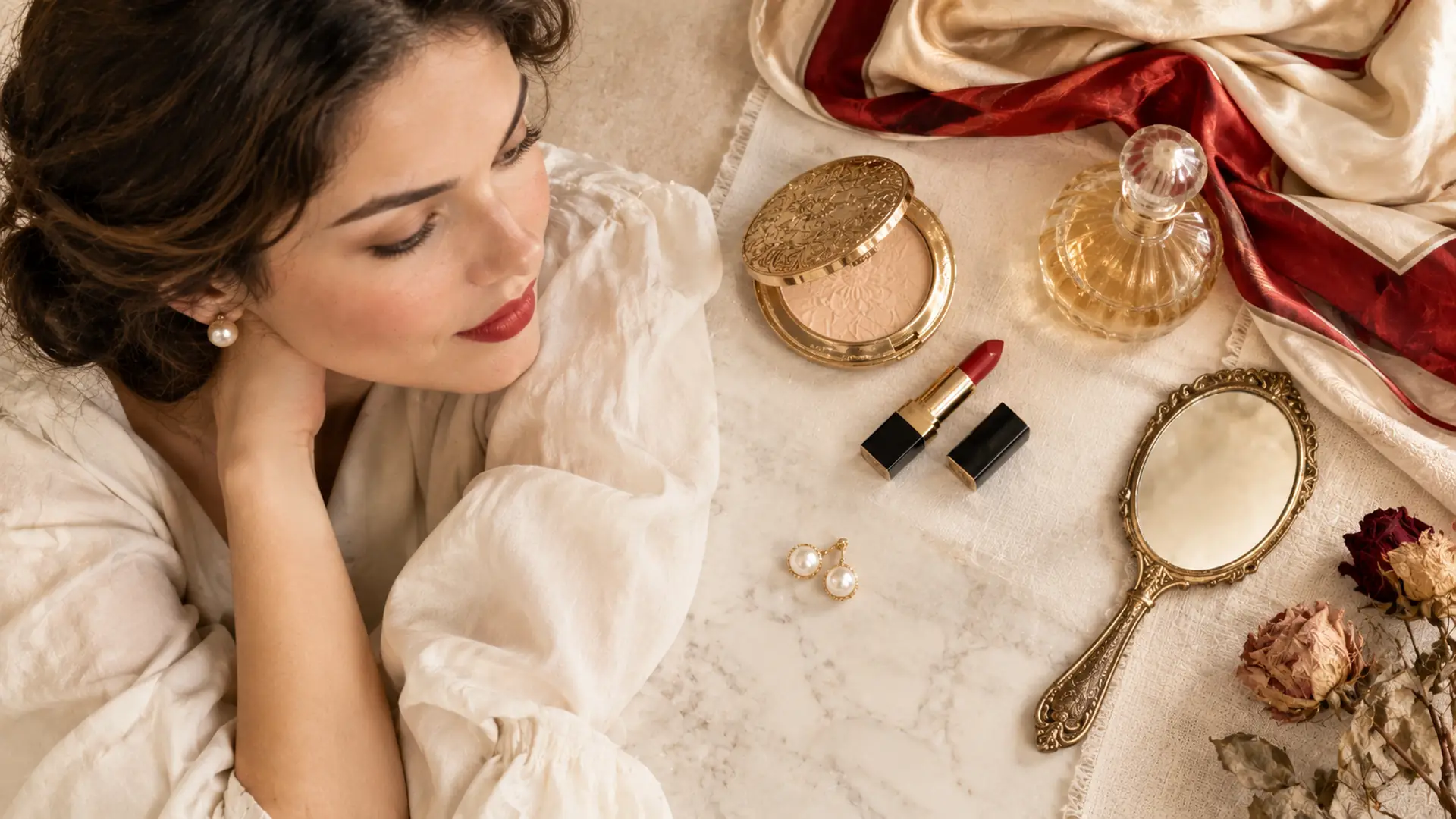
Classic Beauty Features: What Makes a Look Timeless
People usually connect classic beauty with the traits below. No one needs all of them, and none is required:
- Balanced proportions: Features that look harmonious together. Perfect symmetry is rare and not needed.
- Healthy, even skin: Good care matters more than heavy coverage.
- Neat, defined brows: They frame the face and add polish.
- Soft eye definition: Bright eyes with curled lashes and a little mascara.
- A classic lip color: Rose, nude or red.
- Polished hair: Shiny, tidy and shaped.
- Poise and grace: Good posture, calm movement and confident body language.
- Quality over quantity: A few well-chosen products and clothes.
Classic vs Classical vs Vintage vs Modern Beauty
These words are often mixed up. Here is the difference:
| Term | Meaning | Typical look | Trend-driven? |
|---|---|---|---|
| Classic beauty | Timeless elegance that never goes out of style | Polished, balanced, understated | No |
| Classical beauty | Ancient Greek and Roman ideals of harmony and proportion | Even features, calm expression | No, it is an art ideal |
| Vintage beauty | A look from a specific past era | 1940s curls, 1960s winged liner | Tied to one era |
| Modern beauty | Current trends and experiments | Glass skin, bold color, new techniques | Yes |
| Natural beauty | Enhancing your own features with very little makeup | Fresh and minimal | No |
In real life the lines overlap. A classic look can borrow from vintage style, and modern beauty often brings classic ideas back. A red lip, for example, returns every few years.
How to Get a Classic Makeup Look, Step by Step
A classic makeup look is polished but soft. Choose one strong feature, usually the lips or the eyes, and keep the rest quiet. For an even softer everyday version, see our natural makeup look guide.
- Prep the skin: Apply moisturizer and sunscreen, and wait a minute or two.
- Even out the base: Use a light foundation or skin tint, and conceal only where needed.
- Define the brows: Fill sparse areas with light, hair-like strokes and set them with gel.
- Soften the eyes: Sweep a neutral beige or taupe shade over the lids, curl your lashes and add one or two coats of mascara.
- Add warmth: Place a touch of cream or powder blush on the apples of the cheeks.
- Choose your signature lip: Rose or berry for day, classic red for evening. Blot and reapply for a precise finish.
- Set lightly: Press a little powder only where you get shiny.
Choosing a classic red: match it to your undertone.
| Your undertone | Classic red to try |
|---|---|
| Warm | Tomato or orange-based red |
| Cool | Blue-based red or berry |
| Neutral | A true, balanced red |
Skin Care Basics Behind the Look
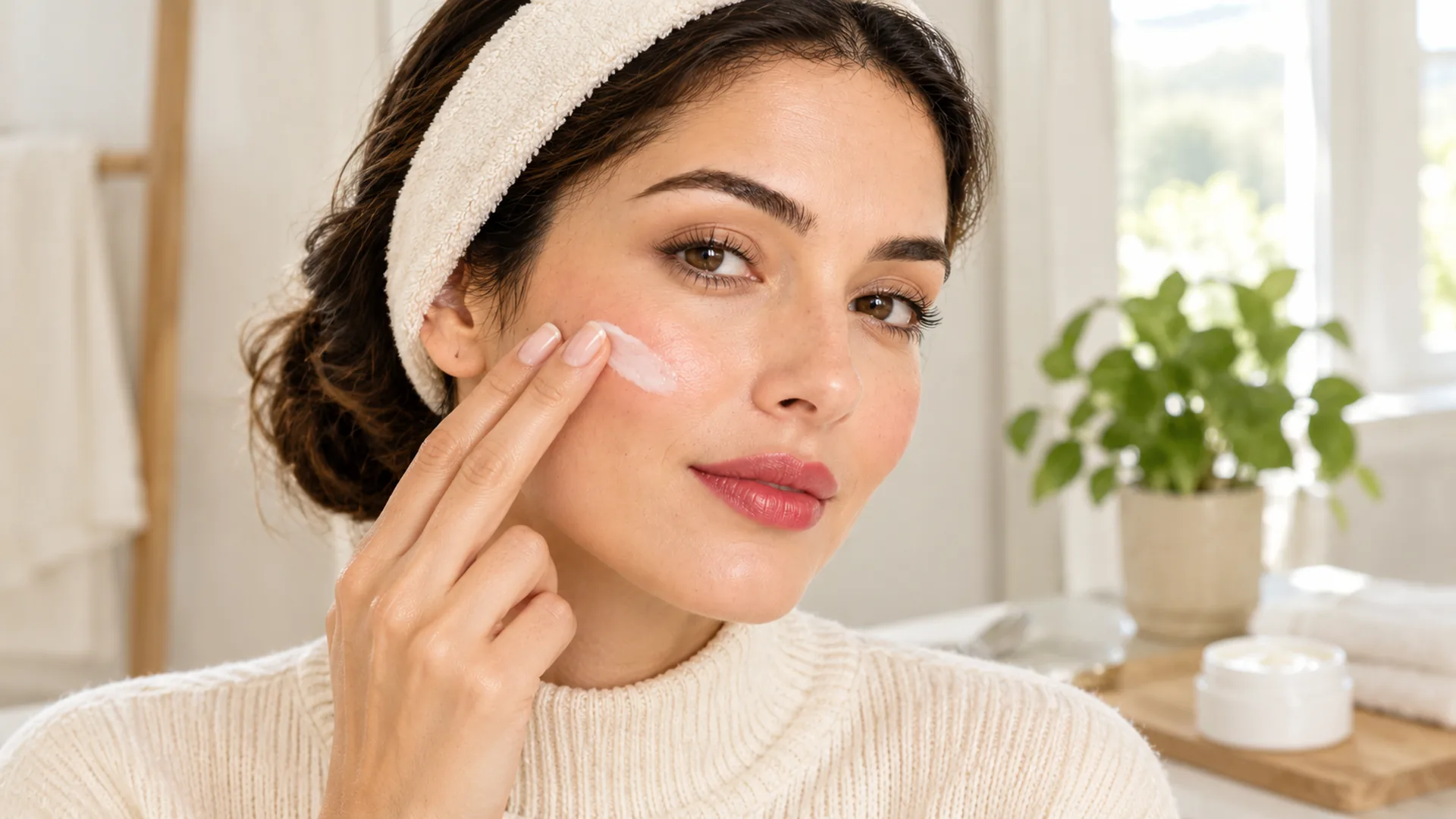
Classic beauty starts with healthy-looking skin, because polished makeup sits best on a calm, hydrated base. Keep your routine simple: a gentle cleanser, a moisturizer, and a broad-spectrum sunscreen every morning (the American Academy of Dermatology recommends SPF 30 or higher). You can add a gentle exfoliant or retinol slowly later. For the full step-by-step routine, read our guide to skin care routine steps, and see how to get smoother, more even skin texture for a better makeup base.
Hair and Nails That Complete the Look
Neat hair and tidy nails finish a classic beauty look. Popular choices include:
- Soft waves: Smooth, shiny and brushed out.
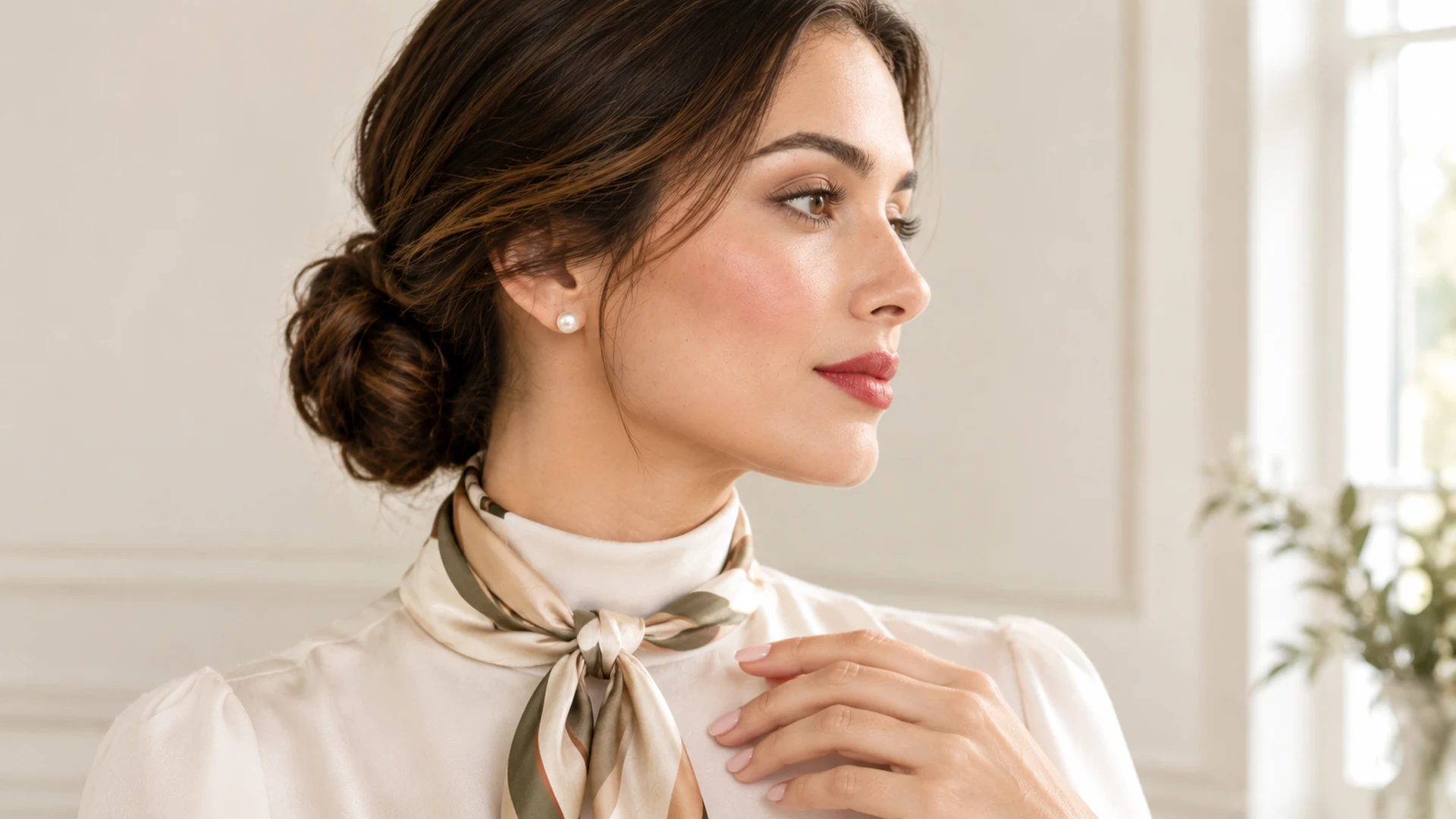
- A low chignon: Clean, simple and elegant.
- A sleek bob: Sharp lines and healthy shine.
- A ponytail with a silk scarf: Relaxed but polished.
For nails, keep them short to medium in an oval or squoval shape, with sheer pink, nude or classic red polish, and tidy cuticles. Our nail care tips show how to prep and apply polish at home.
Classic Beauty Style: Wardrobe Pieces That Never Age
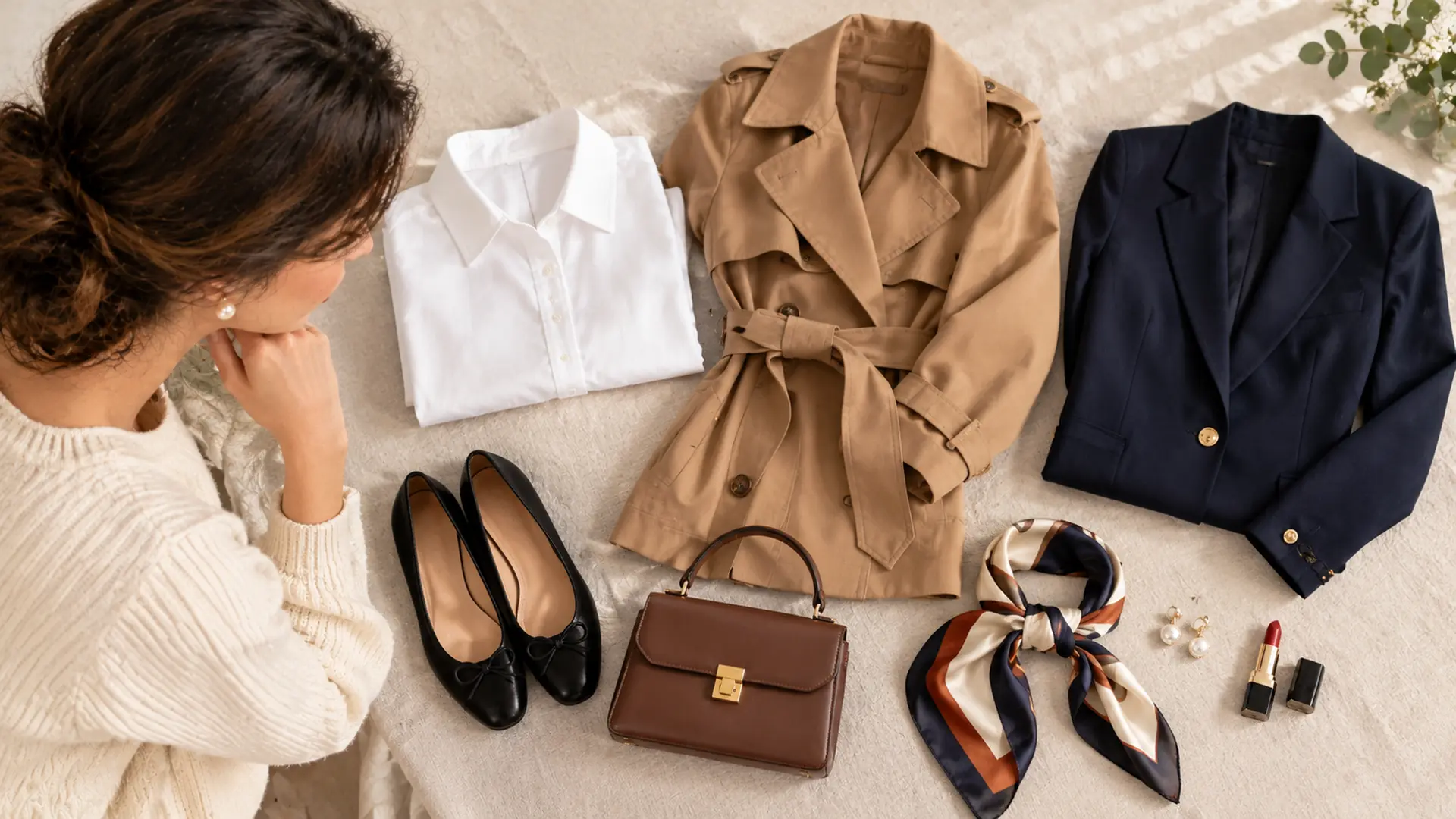
A classic wardrobe is small, well fitted and made of neutral colors. These pieces never go out of style:
- A crisp white shirt
- A tailored blazer
- A camel or beige trench coat
- A little black dress
- Straight or dark denim
- Ballet flats or loafers
- Pearl or small gold earrings
- A silk scarf
- A good leather bag
Stick to black, white, navy, beige and camel, and add one accent color such as red. Buy fewer, better pieces and wear them for years. This also fits sustainable fashion, which we explain in our guide to eco friendly fashion. You can find more ideas in our Fashion Tips.
Icons of Classic Beauty and What They Teach Us
- Audrey Hepburn: A simple black dress, defined brows and neat hair. Lesson: elegance comes from simplicity.
- Grace Kelly: Polished waves and soft makeup. Lesson: refinement is in the details.
- Sophia Loren: Signature winged eyeliner and confident glamour. Lesson: one bold feature can define a look.
- Elizabeth Taylor: Strong brows and a classic red lip. Lesson: classic does not have to be quiet.
- Ingrid Bergman: A fresh, natural-looking face. Lesson: healthy skin is the best base.
- Catherine Deneuve: Effortless, understated French style. Lesson: confidence is the best accessory.
These women are examples of a style, not standards to copy. Take the idea, not the face.
The Kibbe “Classic” Type: How It Is Different
Some people who search for classic beauty actually mean the Kibbe system. Created by stylist David Kibbe and popularized by his 1987 book Metamorphosis, it groups people into style “types”, and “Classic” is one of them. It describes a balanced, symmetrical and understated look, and Grace Kelly is often cited as an example. It is a fashion framework, not science, so use it as inspiration only. Classic beauty in the wider sense is not limited to any one type.
Is Classic Beauty Still Relevant Today?
Yes. Trends such as quiet luxury, minimal makeup and capsule wardrobes are all modern versions of classic ideas. People are tired of constant trend changes, and a classic beauty look saves time, money and stress. The big difference today is that classic beauty is more inclusive: it is a style choice for everyone, not a single standard.
5 Myths About Classic Beauty
- “It means a perfect face.” No. It is about balance and care, not perfection.
- “It only suits one skin tone or age.” No. Anyone can build a classic look with the right shades and styling.
- “It is boring or old-fashioned.” No. Classic pieces mix well with new trends.
- “It is expensive.” No. A red lipstick, a white shirt and good skin care are enough to start.
- “It always means wearing makeup.” No. A bare, well-cared-for face can look classic too.
A 5-Step Plan to Build Your Own Look
- Care for your skin: Cleanse, moisturize and wear sunscreen every day.
- Pick one hero feature: Choose the lips, the eyes or the brows to highlight.
- Find your signature shade: Try a few lip colors until one feels like you.
- Keep hair and nails neat: Regular trims, a simple style and tidy nails.
- Build a small wardrobe: Five to ten well-fitted basics, and stand tall with confidence.
FAQs About Classic Beauty
What is classic beauty?
Classic beauty is a timeless style of beauty based on balance, simplicity, elegance and polish. It focuses on healthy skin, neat grooming and understated style instead of trends.
What are the features of classic beauty?
Common features are balanced proportions, healthy even skin, defined brows, soft eye definition, a classic lip color, polished hair and graceful posture. None of them is required, because classic beauty is about elegance, not a fixed face.
Who is a classic beauty?
Women such as Audrey Hepburn, Grace Kelly and Sophia Loren are often called classic beauties because their style was elegant and timeless. Anyone can create a classic beauty look with the right habits and styling.
What is the difference between classic beauty and natural beauty?
Natural beauty enhances your features with very little makeup, while classic beauty is a more polished and styled look. A classic look can include makeup, such as defined brows and a red lip, but it always keeps a refined and balanced finish.
Is classic beauty timeless?
Yes. Classic beauty is based on balance and simplicity rather than trends, so it stays stylish across decades. Trends come and go, but a neat, polished and understated look always works.
Can anyone have classic beauty?
Yes. Classic beauty is a style, not a face type. Any age, skin tone or face shape can look classic with healthy skin, neat grooming and well-chosen basics.
What is a classic makeup look?
A classic makeup look has an even base, defined brows, soft neutral eyes with mascara, a touch of blush and one signature lip color, such as red or rose.
What is the difference between classic and vintage style?
Classic style stays fashionable across eras, while vintage style recreates the look of a specific past decade, such as 1950s curls or 1960s winged eyeliner.
Final Thoughts on Classic Beauty
So, what is classic beauty? It is a timeless style built on balance, simplicity and polish, and it is open to everyone. Start small: take care of your skin, choose one feature to highlight and add a few well-fitted basics. For more ideas, browse all of our Beauty Tips.